Property owners sometimes overwrite or delete security recordings within days of an accident, destroying the strongest proof of negligence. Surveillance footage in Florida slip and fall cases can validate a victim's account and refute a property owner's denial.
Without this visual evidence, a claim often devolves into a difficult debate between your word and the store manager's report. Attorneys prioritize the immediate preservation of these recordings to protect the truth before a system reset erases it forever.
Key Takeaways for Surveillance Footage in Florida Slip and Falls
- Video evidence is one of the most effective methods for proving that a property owner was aware of a hazard before the accident.
- Stores have no legal obligation to release security recordings directly to a customer without a court order or formal legal request.
- Many commercial security systems automatically overwrite data within days or weeks unless someone manually saves it.
- Spoliation letters formally put the business on notice to preserve the footage or face legal penalties for destroying it.
- Footage can disprove common defense arguments, such as claims that you were distracted by your phone or ignored warning signs.
Why Video Evidence Anchors Liability Claims

Objective reality often differs from the sanitized version of events that appears in an incident report. Insurance adjusters and property owners rely on paperwork to minimize their exposure. Video recordings strip away these subjective interpretations and reveal the mechanics of the fall.
In Florida, the law requires you to prove that the business had constructive notice of the danger. This means the hazard existed long enough that responsible owners would have discovered it through reasonable care.
Proving Constructive Notice
Constructive notice stands as the most difficult element to prove in premises liability cases. A manager at a grocery store in Lutz may claim the spill happened only seconds before you arrived, which is common in types of premises liability accidents in Florida, but surveillance footage can challenge this assertion. Surveillance footage can challenge this assertion.
If the time-stamped video shows a liquid sitting on the floor for 45 minutes while employees walk past it, the defense likely fails because the footage establishes that the business had ample time to clean the area but neglected its duty.
Refuting Comparative Negligence
Defense attorneys frequently attempt to shift blame to the victim using the doctrine of comparative negligence. They may suggest you were texting, rushing, or wearing inappropriate footwear.
A clear video clip can dismantle these accusations by showing you walking at a normal pace with your attention on your path.
When the visual evidence contradicts the adjuster's theory, the value of the claim often increases because the argument for reducing your compensation weakens.
Demonstrating the Severity of Impact
Medical records document the injury, but they don’t show the violence of the impact. Adjusters sometimes downplay the physical trauma of a fall. Video footage allows a jury or mediator to see the force with which you hit the ground.
Seeing a body twist unnaturally or strike concrete creates a visceral understanding of the pain involved. This visual context can support the medical findings and justify the need for extensive treatment.
Securing Video Footage From Florida Properties
Different property owners follow different protocols for video retention. Understanding who controls the camera system determines the legal strategy for obtaining the files.
Different properties may have different rules:
- Big Box Retailers and Grocery Chains: Large corporations like Walmart or Publix have strict internal policies and rarely release video pre-suit. They send the data to a corporate risk management department, often located out of state.
- Small Businesses and Restaurants: Local shops and eateries in Coastal Way - Coastal Landing may use simple, app-based security systems or closed-circuit setups. In these cases, the risk of accidental deletion increases because no formal protocol exists.
- Public and Government Entities: Slip and fall at public parks and play area, municipal buildings, or on city sidewalks involve government entities. Requesting this footage requires strict adherence to sovereign immunity notice periods and public record procedures.
- Third-Party Security Companies: Businesses in the Western Way Shopping Center may contract with outside vendors for security services. The property owner might not even possess the footage; the security contractor holds it.
The Threat of Spoliation and Data Loss
Evidence disappears quickly in the digital age. Spoliation refers to the destruction, alteration, or loss of evidence relevant to a legal slip and fall accident claim. Once a business deletes footage, recovering it becomes nearly impossible.
Florida courts can sanction parties that intentionally destroy evidence, but proving intent requires significant legal maneuvering.
Automatic Overwrite Cycles
Most businesses don’t employ staff to manage video archives permanently. Systems typically operate on a loop, overwriting old data with new feeds to save storage space. This cycle can be as short as a few days.
Intentional Deletion vs. Negligence
Property owners sometimes delete footage intentionally to hide their mistakes. Other times, they simply fail to save it due to incompetence or a lack of urgency. From your case’s standpoint, the result remains the same: the evidence is gone.
However, if a Florida slip and fall accident lawyer sent a preservation letter before the deletion occurred, the court may instruct the jury to assume the missing video contained evidence harmful to the business. This "adverse inference" can save a case even without the video.
The Scope of Preservation
Preserving the footage involves more than just saving the five seconds of the fall. A proper investigation requires video from the hour leading up to the accident and the time immediately following it.
This extended timeline reveals when the hazard appeared, whether employees inspected the area, and how they reacted after the injury.
Legal Hurdles to Accessing Recordings
Many victims assume they have a right to view the video immediately. Unfortunately, Florida law doesn’t automatically grant this right before a lawsuit begins. Private businesses own their surveillance recordings and treat them as proprietary information.
Accessing surveillance footage involves navigating specific legal hurdles and procedural rules:
- Private Property Rights: Stores classify internal records as proprietary information belonging to the corporation. Without a subpoena or other court order, a business can legally deny a request to watch or copy the video.
- The Power of a Subpoena: A subpoena serves as a court order that compels a party to produce evidence. In most cases, this happens after a lawsuit is filed, unless a court allows limited pre-suit discovery.
- Discovery Protocols: During the formal discovery phase of a lawsuit, both sides exchange evidence. Your lawyer must make a discovery request, and the other side must disclose and produce relevant video footage.
Analyzing the Video for Subtle Details
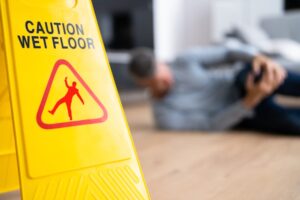
Obtaining the surveillance footage in Florida slip and fall cases represents only the first step. Attorneys can work with forensic analysts to examine the content frame by frame. The camera often captures details that the naked eye misses during playback.
Employee Positioning and Actions
Your Florida slip and fall attorney looks for employees in the background of the shot. If a stock clerk stood five feet away from a puddle and ignored it, the business may have failed its duty. The video proves they had actual notice of the condition.
Your lawyer can also verify if employees followed inspection protocols. If a cleaning log indicates that a bathroom was cleaned at 2:00 PM, but the video shows no one entering the hallway between 1:00 PM and 3:00 PM, the log isn’t accurate.
Lighting and Obstructions
Cameras reveal the ambient lighting conditions at the time of the accident. A grainy, dark video can confirm that the area lacked sufficient illumination. Furthermore, cameras show if displays, boxes, or pallets obstruct the walkway.
Retailers often crowd aisles with merchandise. If the video shows you had to squeeze between boxes to pass, it supports the argument that the store created a dangerous bottleneck.
Identifying Witnesses
The video identifies potential witnesses who left the scene before giving their names. By analyzing the footage, investigators can sometimes track down other customers based on transaction times at the register.
Finding an independent witness who saw the hazard before you fell strengthens the claim significantly.
How a Florida Slip and Fall Lawyer Builds Your Claim
Retaining legal counsel changes the dynamic of the investigation. A lawyer possesses the procedural tools to bypass the store manager's refusal and access the truth.
- Drafting Preservation Letters: Your attorney can send formal demands that carry legal weight, stopping the automatic deletion cycle immediately.
- Filing Subpoenas: Counsel uses the power of the court to force non-compliant businesses to hand over their internal data.
- Retaining Forensic Analysts: Your law firm can hire technical professionals to enhance blurry footage and clarify critical details that prove negligence.
- Analyzing Metadata: Lawyers know how to examine the digital footprint of the file to detect any attempts by the defense to alter or shorten the clip.
Strategies When Footage Is Incomplete or Missing
Sometimes, despite best efforts, the video doesn’t exist or fails to capture the accident area. However, a lack of video doesn’t destroy your case. Your attorney can build the narrative using other forms of evidence to fill the gap.
Examples include:
- Audio Recordings: Many modern security systems record audio. Even if the camera pointed away from you, the microphone might capture the sound of the fall or an employee apologizing and admitting they "meant to clean that up."
- Physical Evidence: Photos that you (or a companion) took immediately after the fall serve as a static replacement for video. They document the substance, the lack of signs, and the condition of the floor.
- Incident Reports: The internal report created by the store often contains admissions. If the manager wrote "customer slipped on leaking detergent," they acknowledged the existence of the hazard, even without video evidence.
- Maintenance Log Gaps: Your attorney can highlight the business's inability to produce cleaning logs or sweep sheets. The absence of these records often damages the defense more than the victim because it suggests a lack of diligence.
- Employee Depositions: Your legal team uses sworn testimony to lock employees into specific versions of events. Inconsistencies in their stories frequently expose negligence even without a recording.
- 911 and EMS Records: Calls to emergency services provide a timestamped record of the event. The description given to the dispatcher often reflects the accident, free from later revisions by the insurance company.
FAQ for Surveillance Footage in Florida Slip and Fall
Can I Demand To See the Video After a Slip and Fall in Florida?
You can ask, but the store doesn’t have to comply; no law requires a private business to show you its proprietary security recordings upon request. They often refuse to prevent you from using it against them.
A lawyer can demand the release of this footage later during the litigation process through formal discovery requests.
What Happens if the Store Deletes the Surveillance Video?
If a store deletes video after receiving a preservation letter, the court may sanction it. This sanction can include an adverse inference instruction, which tells the jury it may infer the deleted video would have been unfavorable to the store.
This legal consequence often damages the defense more than the video itself would have.
Does Surveillance Footage Prove the Store Knew About the Spill?
Video evidence can frequently prove constructive notice. If the recording shows the hazard on the floor for a significant period, it establishes that the store should have cleaned it.
Florida law requires proof of notice to win a slip and fall claim, and the timeline revealed by the footage often decides the outcome of the case.
Can a Florida Slip and Fall Lawyer Get Footage From Nearby Businesses?
Yes, attorneys can subpoena footage from neighboring properties. If you fell in a parking lot in Inverness, a camera from the shop next door might have captured the incident. Lawyers investigate all angles and request preservation from every entity with a view of the accident scene.
How Long Do Stores Keep Their Recordings?
Retention policies vary significantly by company. Some systems overwrite data within days, while others keep it for 30 days or more. Since this timeline remains uncertain and often short, sending a preservation letter immediately helps prevent the loss of this critical evidence.
Securing the Evidence You Need
Securing surveillance footage in Florida slip and fall cases provides a massive advantage, but a deleted file doesn’t end your fight for compensation. Property owners often count on you walking away once they claim the evidence is gone. We don’t let them off the hook that easily.

Our firm knows how to build successful strategies using witness testimony, maintenance records, and forensic analysis to prove liability even when the screen goes dark. Whether the camera captured the fall or not, we have experience and tools to challenge an insurance company's denial.
Contact us today via our online form so we can start the process of securing the proof you need.

James Wayne Holliday
James Wayne Holliday has been practicing law since 1995. He has been named as a “Best Attorney” Lifetime Charter Member in Florida, an honor awarded to less than one percent of the nation’s lawyers.
Mr. Holliday has earned a reputation as a relentless trial lawyer because of his outstanding work ethic and thorough preparation of his cases for trial.
Author's Bio