Many people believe that if their own actions contributed to their slip and fall accident, they cannot recover any compensation, but this is a common and costly misconception. Under Florida's comparative negligence law, you may still have a right to seek financial recovery even if you’re found partially at fault for your injuries.
The law provides a specific framework for how property owners and their insurers must handle claims involving shared fault. What truly matters is the percentage of fault that gets assigned to each party involved. A Florida slip and fall lawyer can help evaluate your case, gather evidence, and protect your right to fair compensation.
This determination directly affects the amount of compensation you can receive. Navigating a claim under Florida's comparative negligence law requires a clear understanding of how fault gets argued and proven.
Key Takeaways for Florida's Comparative Negligence Law
- Florida uses a modified comparative negligence system, meaning you can only recover damages if you’re found 50% or less at fault.
- Your percentage of assigned fault reduces your final compensation award.
- The evidence you preserve from the accident scene plays a direct role in countering accusations of shared fault.
- Property owners and their insurance companies actively search for ways to shift blame onto you to reduce or deny your claim.
Defining Comparative Negligence in Florida Injury Claims
When a property owner's carelessness leads to your injury, they’re considered negligent. However, their insurance company will investigate your actions leading up to the incident to see if your own conduct contributed to the fall. You sue for a slip and fall in Florida when the property owner’s negligence directly causes your injuries and financial losses.
This is the core concept behind Florida's comparative negligence law, which provides a legal mechanism for allocating fault between you and the property owner. The law operates on a simple principle: your financial recovery reflects your degree of responsibility.
Insurers, lawyers, and sometimes a judge or jury examine the actions of everyone involved and assign a percentage of fault to each. This percentage then adjusts the total amount of damages you receive.
Florida's Switch to a Modified System
Florida law on this topic underwent significant changes in 2023. Previously, the state used a pure comparative negligence model. Under the old rule, you could recover damages even if you were 99% at fault for your accident.
The state now follows a modified comparative negligence standard, as outlined in Florida Statute 768.81. This change introduced a critical new threshold for all personal injury cases. Understanding this change clarifies your rights in a slip and fall claim.
What the 51% Bar Rule Means for Your Claim
The most significant feature of modified comparative negligence is the 51% bar. This rule means that you cannot recover any damages if a court finds you 51% or more responsible for the accident. If your portion of the blame meets or exceeds that percent, your claim is legally barred.
For instance, if you have 50% of the fault, you can recover 50% of your damages. However, if they determine that you are 51% at fault, you’ll recover nothing. This strict cutoff makes it a primary goal for insurance adjusters to push your percentage of fault over this line.
The Difference Between Economic and Non-Economic Damages
In a Florida personal injury claim, damages are categorized as either economic or non-economic. Florida's comparative negligence law reduces your recovery in both categories based on your assigned percentage of fault.
Economic damages cover the specific, calculable financial losses resulting from your injury, which you can prove with receipts, bills, and employment records. They represent a direct reimbursement for the money the accident has cost you. Slip and fall accident claims in Florida often include these economic damages, helping victims recover the financial stability they lost after the incident.
Non-economic damages compensate you for the intangible, personal losses that lack a direct price tag. These damages address the human cost of the injury, such as the physical pain and emotional turmoil you experience.
Common damages include:
- Past and Future Medical Bills: This includes the full cost of your medical care, from the initial emergency room visit to ongoing physical therapy, surgeries, and prescription medications.
- Lost Wages: You may recover the income you lost while unable to work during your recovery period.
- Loss of Earning Capacity: If your injuries permanently affect your ability to earn the same income you did before the accident, this damage covers that future financial shortfall.
- Pain and Suffering: This compensates you for the physical pain, discomfort, and general suffering you endure because of the injuries you sustained.
- Emotional Distress: This payment addresses the significant psychological impact of the accident and your injuries, such as anxiety, fear, sleep disturbance, or depression.
- Loss of Enjoyment of Life: This compensates you for your diminished ability to participate in hobbies, activities, and life experiences that you previously valued.
How Property Owners Argue Shared Fault After a Slip and Fall
After you file a claim, the property owner's defense will likely focus on your actions at the time of the incident. Their lawyers and insurance adjusters will look for any behavior that suggests you failed to exercise reasonable care for your own safety. You need a lawyer after a slip and fall to counter these tactics, protect your rights, and build a strong case that highlights the property owner’s negligence.
Common defense tactics include:
- The 'Open and Obvious' Hazard: The owner may claim the dangerous condition was so apparent that a reasonably cautious person would have seen and avoided it, shifting the blame to you for not paying attention.
- Ignoring Posted Warnings: The defense may argue they fulfilled their duty by placing a warning sign, cone, or tape, and that your injury resulted from your own choice to ignore that warning.
- Your Personal Distractions: They may scrutinize your conduct, claiming you were distracted by your phone or otherwise not paying attention.
- Inappropriate Footwear: The owner may contend that the footwear you chose was unsafe for the environment, framing your personal choice as a primary cause of the fall.
Calculating Your Recovery With Florida's Comparative Negligence Law

The math behind Florida's comparative negligence law is straightforward. Once a total damage amount is determined, that number is multiplied by your percentage of fault. The result is then subtracted from the total, leaving the amount you can recover. Can you file a slip and fall claim depends on proving that the property owner’s negligence directly caused your injuries and that your share of fault is 50% or less.
Imagine a slip and fall case where your total damages for medical bills, lost income, and pain and suffering add up to $100,000. The case goes to trial, and the jury listens to arguments from both you and the property owner.
After reviewing all the evidence, the jury decides that the property owner was 90% at fault, but you were 10% at fault because you were looking at your phone.
To calculate your final award, you subtract your 10% portion of the fault ($10,000) from the total damages of $100,000. Your final recovery would be $90,000.
Factors that influence the percentage include:
- Witness Testimony: What did others see in the moments leading up to your fall? Did they observe your actions or the condition of the property?
- Video Surveillance: Many businesses have security cameras. Footage can provide objective proof of what happened.
- Your Own Statements: Any admissions of fault you make to the property owner or an insurance adjuster can be used to increase your percentage of blame.
The Role of Evidence in Disputing Fault
The percentage of fault assigned to you isn’t arbitrary. It’s based on the evidence presented by both sides. Therefore, the strength of your claim under Florida's comparative negligence law depends heavily on the quality and quantity of the evidence you gather.
Strong evidence helps your attorney build a compelling story that shows the property owner was primarily responsible for your injuries. It can also effectively counter any claims the insurance company makes about your own carelessness. Proving negligence in a slip and fall case relies on presenting this evidence clearly to show that the property owner failed to maintain safe conditions.
The more proof you have, the more leverage you have in settlement negotiations.
Types of useful evidence include:
- Photographs and Videos: Pictures of the unchecked spill, broken staircase, or poor lighting that caused your fall make it difficult for insurers to ignore. A video showing the area captures the conditions and contextualizes them for investigators..
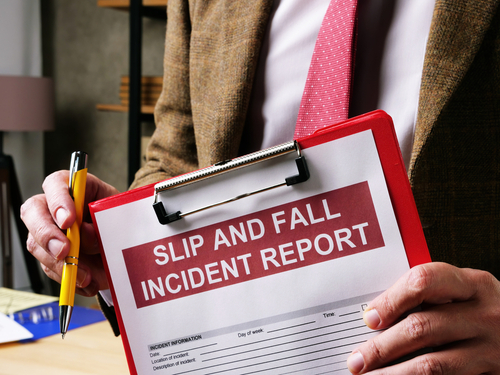
- Incident Reports: If you fell at a commercial property, the business may have created an internal incident report. This document can contain important admissions or details.
- Medical Records: Your medical files create a link between the slip and fall accident and the specific injuries you sustained. They also document the severity of your condition.
- Physical Evidence: Keep the shoes and clothing you were wearing at the time of the accident. Don’t wash them, as they may contain residue from the substance that caused you to fall.
Why You Shouldn’t Speak With Insurance Adjusters Alone
Shortly after your accident, you’ll likely get a call from an insurance adjuster representing the property owner. The adjuster may seem friendly and concerned for your well-being. Their job, however, is to protect their company's financial interests by minimizing or denying your claim.
Avoid Recorded Statements
Adjusters receive training to ask questions designed to elicit responses that can be interpreted as an admission of fault. They may ask you to give a recorded statement about the accident, hoping you will say something that increases your share of the blame.
A seemingly innocent comment about being in a hurry or not looking down can become a central piece of their argument. Pain and suffering after a slip and fall can worsen when insurers twist your words to reduce your compensation, making legal representation vital to protect your claim.
You’re not obligated to give a recorded statement without your lawyer present. Allowing an experienced slip and fall attorney to handle all communications with the insurance company protects you from accidentally damaging your own case.
Your lawyer knows how to provide the necessary information without compromising your legal position.
How a Lawyer Maximizes Your Compensation Under Florida's Comparative Negligence Law

Navigating the complexities of a slip and fall claim is challenging, especially when the other side actively works to blame you. An attorney acts as your advocate, working to protect your rights and counter the insurance company's tactics. Insurance denies your slip and fall claim when they believe you were mostly at fault or lack sufficient evidence, but a lawyer can appeal the denial and fight for the compensation you deserve.
Specific ways an attorney helps include:
- Evidence Preservation: Your lawyer will act quickly to preserve crucial evidence before the property owner can alter or destroy it. This includes sending official spoliation letters and subpoenaing video footage.
- Professional Investigation: Attorneys work with investigators and engineers to analyze the accident scene, document dangerous conditions, and demonstrate that the property owner knew or should have known about the hazard.
- Managing Communication: Your legal team will take over all communications with the insurance adjuster. This prevents you from making statements that could be used against you to increase your percentage of fault.
- Negotiating a Fair Settlement: Armed with strong evidence and a deep knowledge of the law, your Florida slip and fall lawyer will negotiate with the insurance company for a settlement that accurately reflects your damages.
- Filing a Lawsuit: If the insurance company refuses to offer a fair settlement, your lawyer can file a lawsuit and argue your case in court.
FAQ for Florida's Comparative Negligence Law
How Do Courts Assign a Percentage of Fault?
Initially, your attorney and the property owner's insurance company negotiate the percentage of fault. During this process, both sides present and analyze all the available evidence, including witness testimony, video footage, incident reports, and expert opinions.
While their goal is to agree on a percentage to settle your case, if they cannot agree and the case proceeds to trial, a judge or jury will make the final determination after reviewing all the evidence and arguments presented.
What if the Property Owner Says the Hazard Was Obvious?
The "open and obvious" defense is a common strategy, but it’s not always successful. Your lawyer can fight this argument by showing that while the hazard may have been visible, you were unlikely to notice it due to other factors.
For example, your attention may have been legitimately drawn to a store display, or poor lighting in a parking lot may have made it difficult to see a pothole.
Can I Still Recover Damages if I Was Texting When I Fell?
You may still be able to recover damages even if you were texting when you fell, but it will likely impact your case. The defense may argue that your distraction makes you significantly responsible for the incident.
However, a property owner still has a legal duty to maintain a reasonably safe environment, and your distraction doesn’t erase their negligence in allowing a dangerous condition to exist.
What if a 'Wet Floor' Sign Was Out, but I Still Slipped?
The simple presence of a warning sign doesn’t automatically protect a property owner from liability. The sign must be placed in a location where it is clearly visible and must provide a reasonable warning of the specific hazard.
If the sign was placed too far away, was obscured from view, or if the slippery area was much larger than a customer might expect, the warning may be deemed inadequate.
Does Florida's Comparative Negligence Law Apply to All Injury Cases?
No, Florida’s comparative negligence law and its 51% bar don’t apply universally. While the law governs most personal injury lawsuits, such as slip and fall claims, there is a major exception for claims based on medical malpractice.
Medical negligence cases continue to operate under Florida’s older pure comparative negligence standard, allowing you to recover damages even if you’re found more than 50% at fault.
Additionally, the law doesn’t apply to intentional torts, as someone who deliberately harms you cannot argue that you were partially responsible to reduce their liability.
Your Next Step Forward
After a fall, protecting your future begins with documenting everything you remember about the incident and how it has affected your life. You have a right to seek compensation, and accusations of shared fault don’t erase it.
Contact the team at SlipOrFall.com for a free consultation by calling (866) 597-0009.

James Wayne Holliday
James Wayne Holliday has been practicing law since 1995. He has been named as a “Best Attorney” Lifetime Charter Member in Florida, an honor awarded to less than one percent of the nation’s lawyers.
Mr. Holliday has earned a reputation as a relentless trial lawyer because of his outstanding work ethic and thorough preparation of his cases for trial.
Author's Bio