In Florida, icy walkways and snow-covered surfaces are rare, but they do happen — especially in the early mornings, shaded areas, and during unusual cold snaps. When sidewalks, parking lots, or entryways freeze over, businesses and property owners may be caught off guard, and visitors can suffer serious injuries from sudden slip and fall accidents. These incidents often lead to broken bones, back injuries, head trauma, and long-term mobility problems.
Even though ice and snow aren’t everyday hazards in Brooksville, Lutz, or Inverness, liability still depends on whether the property owner took reasonable steps to make the area safe. Victims frequently face insurance pushback, unclear responsibility, and fast-changing weather conditions that complicate their claims. Understanding how liability works in ice- and snow-related slip and fall cases is essential for anyone injured under these circumstances, especially with guidance from an experienced Florida slip and fall lawyer.
Key Takeaways:
- Ice and snow can create dangerous slip hazards on walkways, parking lots, and building entrances.
- Property owners may be liable if they failed to take reasonable precautions.
- Weather conditions do not excuse negligence.
- Evidence must show the owner knew or should have known about the dangerous condition.
- Legal guidance is essential because liability in weather-related accidents is often disputed.
How Ice and Snow Create Dangerous Conditions on Florida Properties
While Florida is known for its warm climate, cold fronts occasionally bring freezing temperatures that create hazardous surfaces overnight. Water from sprinklers, condensation, or light rain can freeze on concrete walkways, stairs, ramps, or parking lots. When this occurs, the slick surface can be nearly invisible to visitors. These conditions are especially dangerous near businesses where customers walk frequently, such as grocery stores, medical offices, and shopping centers in Brooksville or Lutz.
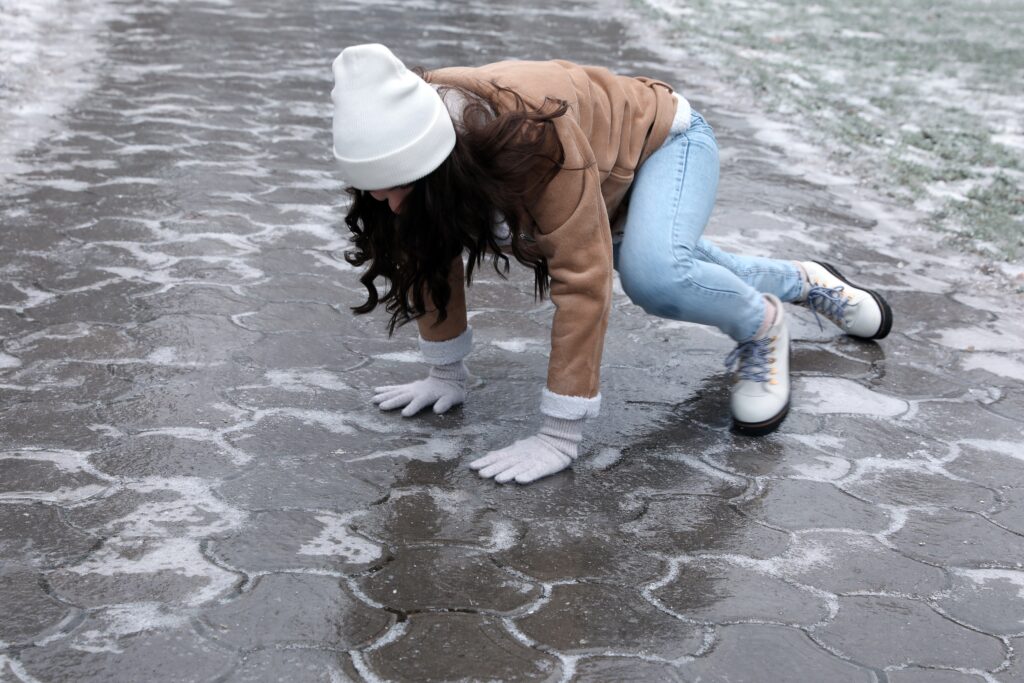
Ice may form in shaded areas where sunlight doesn’t reach, meaning hazards persist throughout the morning. Sloped walkways and smooth surfaces are especially prone to becoming dangerously slick. When a property owner fails to recognize these risks or ignores them, people entering the premises are put at serious risk. Injuries can occur without warning, and victims often have no idea the surface is frozen until they are already falling.
Because icy conditions develop quickly, businesses must remain alert to weather forecasts and temperature drops. When they fail to monitor their property and take simple precautions — such as blocking off icy areas, placing warning signs, or applying salt or sand — they may be responsible for slip and fall injuries.
When Property Owners Are Responsible for Ice and Snow Hazards
Liability depends on whether the property owner acted reasonably under the circumstances. Businesses and landlords must maintain walkways in a safe condition, even when weather changes unexpectedly. If ice or snow formed after a known temperature drop and the owner did nothing to address it, this may be considered negligence.
Reasonableness includes monitoring forecasts, inspecting high-traffic areas regularly, and responding quickly to reports of icy conditions. For example, if a store manager knew temperatures were below freezing overnight but failed to check the parking lot or entrance ramps before opening, they may be responsible for resulting accidents. Likewise, if employees observed ice but took no steps to warn customers, the property owner may be liable.
In contrast, if ice formed immediately before the fall and the property owner had no reasonable opportunity to discover it, liability may become more complex. This is why thorough documentation and prompt investigation are so important. Each case depends on what the owner knew or should have known — and whether they acted appropriately once they had that knowledge.
The Importance of “Notice” in Weather-Related Slip and Fall Claims
In premises liability cases involving ice or snow, “notice” is a critical factor. To hold a property owner responsible, evidence must show they either knew about the hazardous condition or should have known through reasonable inspections. Actual notice occurs when an employee sees the ice or a customer reports it. Constructive notice exists when the hazard was present long enough that the owner should have discovered it.
Ice-related claims often hinge on constructive notice. For example, if temperatures were below freezing for several hours and water from irrigation systems consistently pools near the entrance, the property owner should anticipate ice forming. Even if the owner didn’t see the ice, they may still be held liable for failing to take preventative steps.
Insurance companies frequently challenge notice, arguing the ice appeared too quickly for the owner to act. To counter this, attorneys look at timelines, weather data, maintenance practices, and employee statements. The goal is to show the hazard was predictable or present long enough that reasonable action should have been taken. Understanding notice helps clarify when a fall was preventable — and when a property owner may be legally responsible.
Common Injuries Caused by Ice- and Snow-Related Falls
Falls on icy or snowy surfaces often result in more severe injuries than typical slip and fall incidents because victims have little ability to brace themselves. The sudden, forceful impact can lead to broken wrists, fractured hips, torn ligaments, head injuries, and spinal damage. For older adults, these injuries may require long-term rehabilitation or surgery. For younger victims, even a seemingly “simple” fall can result in months of physical therapy or chronic pain.
Icy falls can also cause traumatic brain injuries if the victim hits their head on concrete or asphalt. These injuries may produce dizziness, headaches, memory problems, or long-term cognitive issues. Insurance companies often claim that injuries from these accidents are exaggerated, but medical evidence frequently shows that even a short slip can create substantial damage.
Recovery may involve MRIs, follow-up visits, physical therapy, and time away from work. Some victims find their mobility permanently reduced. Recognizing the seriousness of these injuries is essential in evaluating liability and determining fair compensation after a fall.
Why Weather Does Not Excuse Negligence
Property owners sometimes argue that weather conditions were beyond their control. While they cannot stop ice or snow from forming, they can control how they respond to those conditions. Weather does not eliminate their duty to maintain safe premises. In fact, hazardous weather requires more vigilance because risks increase significantly.
Negligence may occur when a property owner ignores forecasts, fails to inspect walkways, or delays taking reasonable precautions. The law does not expect perfection — only reasonable care. When a fall occurs because the owner failed to respond to known risks, liability may apply.
Insurance companies often attempt to blame the weather to avoid responsibility, but the law recognizes that preventable hazards remain preventable — even in winter conditions. Understanding this distinction is key to determining who is legally accountable for injuries caused by ice or snow.
How Businesses Should Respond to Ice and Snow Hazards
When temperatures drop, businesses must take extra steps to protect customers and visitors from icy surfaces. Reasonable precautions may include applying salt or sand, placing cones or warning signs, blocking off hazardous walkways, and inspecting frequently trafficked areas for refreezing. Many slip and fall accidents occur because a business failed to take these simple steps, even after weather forecasts clearly warned of freezing conditions.
Businesses also have a responsibility to train employees on how to identify and report hazardous weather-related conditions. If an employee notices ice on an entry ramp, they must act promptly — not wait until multiple customers slip before taking action. When these procedures are missing or inconsistently followed, the business may be liable for resulting injuries.
Some companies rely on third-party vendors for snow or ice management. However, outsourcing does not eliminate their duty to maintain safe premises. If a contractor fails to treat icy conditions properly and a fall occurs, both the business and contractor may share responsibility. Ultimately, a business must ensure its property remains reasonably safe and cannot shift blame simply because someone else performed the work.
How Attorneys Prove Ice and Snow Liability
Proving a property owner’s negligence in icy slip and fall cases requires a detailed investigation.
Attorneys gather evidence to show how the hazard formed, how long it existed, and whether the owner responded appropriately. This may include reviewing security footage, interviewing witnesses, obtaining weather reports, and analyzing maintenance logs. In some cases, experts may evaluate drainage patterns, walkway design, or freezing points to determine how predictable the hazard was.
Photos taken shortly after the fall can be powerful evidence, especially if they show untreated ice, a lack of warning signs, or areas where water consistently accumulates. Attorneys also look at the property’s maintenance history to determine whether inspections were conducted regularly and whether employees documented hazardous conditions.
Insurance companies often attempt to argue that the fall was unavoidable or that the victim was not paying attention. Effective legal strategy focuses on showing how proper precautions would have prevented the accident. By identifying failures in inspection, maintenance, or response time, attorneys highlight the property owner's responsibility for creating or allowing a dangerous condition to persist.
Why Victims Should Seek Medical Care Immediately
Slip and fall victims often underestimate their injuries at first, especially when the fall happens quickly and the initial shock masks pain. However, injuries from icy falls can be far more serious than they appear. Broken bones, ligament tears, and spine injuries may not show symptoms immediately. Delaying treatment can worsen the condition and create challenges later when insurers claim the injury was unrelated.
Medical documentation is a key part of proving liability. When a doctor evaluates the victim soon after the fall, the records help establish a timeline and show the direct connection between the hazardous condition and the injury. Insurance companies frequently challenge claims when victims wait days or weeks before seeking treatment, arguing the injury may have come from another source.
Early medical care also helps victims understand the extent of their injuries, begin proper treatment, and avoid long-term complications. Even mild symptoms — such as swelling, stiffness, or dizziness — should be evaluated promptly, as they may signal deeper issues. Proper documentation supports both medical recovery and legal claims.
Challenges Victims Face When Making a Claim
Slip and fall claims involving ice or snow often face pushback from property owners and insurers. They may argue that the weather made the fall inevitable, that the victim was rushing, or that the ice formed too quickly to address. These arguments can frustrate victims who know the fall occurred because the walkway was not maintained properly.
Victims may also struggle to gather evidence on their own. Ice melts quickly, signs are removed, and employees’ memories fade. Without legal support, it becomes difficult to show the hazard existed long enough for the property owner to have addressed it. Insurance companies may also pressure victims to give statements that shift blame away from the business.
Attorneys help navigate these challenges by preserving evidence, managing communication with insurers, and presenting a clear argument based on safety standards and reasonable care. When victims understand these hurdles, they can avoid being misled or discouraged during the claims process.
How Holliday Karatinos Law Firm Supports Victims Injured on Ice or Snow
Cases involving winter conditions require a careful, strategic approach. Holliday Karatinos Law Firm investigates the circumstances surrounding the fall, examines the property’s maintenance practices, and determines whether reasonable steps were taken to prevent icy conditions. The firm reviews weather data, secures witness statements, analyzes property design, and evaluates whether the owner responded appropriately to freezing temperatures.

In ice- and snow-related cases, attention to detail is essential. Attorneys look at how quickly the temperature dropped, whether water sources contributed to the hazard, and whether employees or managers recognized or ignored the danger. This thorough analysis helps build strong arguments that counter insurance company excuses and highlight preventable negligence.
Slip and fall injuries can disrupt a victim’s life significantly, both physically and financially. Holliday Karatinos Law Firm works to ensure victims receive fair compensation for medical care, lost income, and lasting effects from the fall. Their support helps victims move forward with confidence, knowing their case is being handled with skill and dedication.
Give Us a Call Today
Slip and fall accidents involving ice or snow may seem straightforward, but liability can quickly become complicated. You deserve experienced legal guidance that understands how these hazards form, how property owners should respond, and what evidence is needed to prove negligence. Holliday Karatinos Law Firm is ready to help you navigate the challenges of your claim and pursue the compensation you deserve.
If you were injured after slipping on ice or snow in Brooksville, Lutz, or Inverness, give us a call today at (866) 597-0009 to speak with an attorney who can assist you.